Nie Weiping, the Chinese Go master whose victories in the 1980s helped revive Go in China and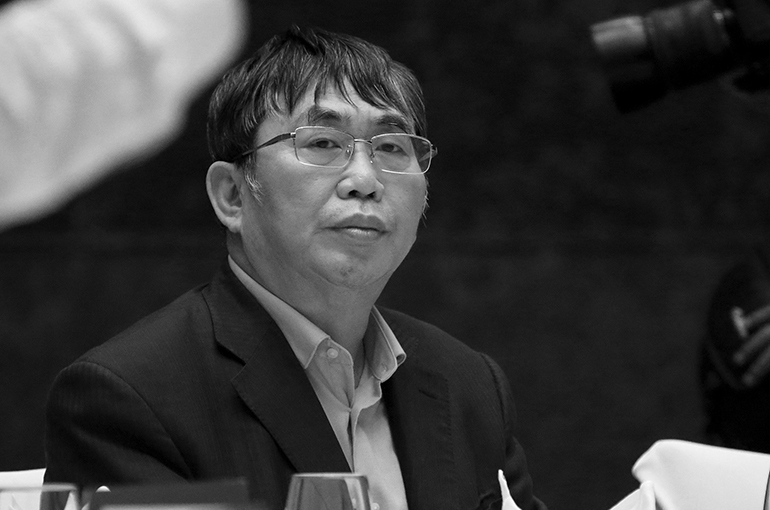 reestablish the country as a global Go power, died on January 14, 2026, at the age of 73.
“For many of us outside China, Nie Weiping was the first Chinese player we watched who made it clear that the world of Go had changed," said American Go Association president Gurujeet Khalsa. "His impact went far beyond individual games; he helped open a new era for international Go.”
Born in Beijing in 1952, Nie Weiping learned Go during a period when organized play in China was fragmented and resources were scarce. Largely self-taught in his early years, he emerged in the 1970s as China’s strongest player, at a time when Japan and South Korea dominated the international Go world. “Nie leaves behind a legacy that reshaped the game in China and inspired generations of players,” said US pro Michael Chen. Watch his video about Nie Weiping's legacy here.
Nie rose to international prominence through the landmark China–Japan Supermatches beginning in 1984. Serving repeatedly as China’s anchor player, he scored decisive victories against top Japanese professionals, often under intense pressure. These matches captivated audiences in China and transformed Nie into a national figure, symbolizing China’s return to elite Go competition after decades of relative absence.
As a player, Nie Weiping was known for his fighting spirit, psychological toughness, and ability to prevail in long, grueling matches. While he did not pursue a prolonged title career in Japan or Korea, his results against leading international opponents during his peak years established him as one of the strongest players in the world in the 1980s.
Nie’s influence extended far beyond his personal record. He played a central role in rebuilding China’s professional Go infrastructure, mentoring younger players and advocating for systematic training and competition. The subsequent rise of Chinese champions—including Ma Xiaochun, Gu Li, and later generations—occurred within a Go culture reshaped by Nie’s achievements and public stature. Many would also go on to contribute to the North American Go community, such as New York Institute of Go's Stephanie Yin.
In later years, Nie remained an influential figure as a commentator, administrator, and ambassador for the game. He helped popularize Go through media appearances and writing, and continued to speak publicly about the game’s cultural and educational value.
Nie Weiping’s legacy is inseparable from the modern history of Chinese Go. More than a champion, he was a catalyst: a player whose victories restored confidence, inspired a generation, and helped lay the foundation for China’s emergence as a dominant force in world Go.